

Sciatic Pain: What It Is and the Two Main Causes
Introduction
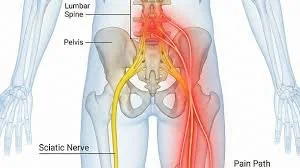
Sciatic nerve
Sciatica is one of the most common reasons people experience pain that travels from the lower back into the leg. It can be intense, frustrating, and often confusing because the symptoms don’t always stay in one place. For some people, it feels like a sharp, shooting pain down the back of the leg. For others, it may present as burning, tingling, numbness, or a deep ache that worsens with sitting or movement.
What makes sciatic pain particularly misunderstood is that it is not a condition on its own. Instead, it is a symptom—an indication that something is irritating or compressing the sciatic nerve or the nerve roots that contribute to it.
Understanding where the irritation is coming from is the key to effective treatment and long-term relief.
What Is the Sciatic Nerve?
The sciatic nerve is the largest and longest nerve in the human body. It originates from nerve roots in the lower lumbar spine (L4–S3), then travels through the pelvis, into the buttocks, and down each leg. It branches off into smaller nerves that supply sensation and muscle control to the lower extremities.
Because of its long pathway, irritation at any point along the nerve can cause symptoms that radiate far from the original source. This is why someone with a low back issue may feel pain all the way down to their foot.
Common Symptoms of Sciatic Pain
Sciatic pain can vary widely depending on the source and severity, but common symptoms include:
Sharp, shooting pain down one leg
Burning or electric sensations
Tingling or “pins and needles”
Numbness in the leg, foot, or toes
Muscle weakness in the affected leg
Pain that worsens with sitting, bending, coughing, or lifting
Symptoms may come and go or remain constant, and they often follow a specific pathway depending on which nerve root is affected.
The Two Main Causes of Sciatic Pain
Although sciatic pain has many possible triggers, most cases fall into two primary categories: nerve compression in the spine or soft tissue/muscular irritation.
1. Nerve Compression in the Lumbar Spine
The most common cause of sciatic pain originates in the lower back where the nerve roots exit the spine.
When these nerve roots become compressed or irritated, it can trigger pain that travels along the sciatic nerve pathway. This type of irritation is often more “true sciatica” in a clinical sense.
Common causes include:
Herniated or bulging discs: When the soft inner material of a spinal disc pushes outward and presses on nearby nerve roots.
Degenerative disc disease: Age-related changes that reduce disc height and increase pressure on nerves.
Spinal stenosis: Narrowing of the spinal canal, reducing space for the nerves.
Facet joint inflammation: Irritation in the small stabilizing joints of the spine.
Postural or mechanical strain: Repetitive stress or poor movement patterns that increase pressure in the lumbar region.
What this feels like:
Pain often starts in the lower back and radiates down the buttock, thigh, and sometimes into the calf or foot. It may worsen with sitting, bending forward, or lifting.
2. Muscular and Soft Tissue Entrapment
Not all sciatic pain originates in the spine. In many cases, the nerve becomes irritated as it passes through the deep gluteal and pelvic region.
This type of sciatic pain is often associated with muscular tension, restriction, or imbalance.
Common contributors include:
Piriformis and deep glute muscle tightness
Myofascial trigger points in the glutes, hips, or low back
Prolonged sitting or sedentary posture
Hip or pelvic imbalances
Overuse from repetitive movement or physical strain
When these tissues become tight or overactive, they can compress or irritate the sciatic nerve as it passes through the area.
What this feels like:
Pain is often deeper in the buttock and may worsen with sitting, hip rotation, or prolonged static positions. It may not always involve strong low back pain, and symptoms can feel more localized to the gluteal region before radiating down the leg.
Why Identifying the Source Matters
While the symptoms may feel similar, the underlying cause determines the most effective treatment approach.
Spine-related sciatic pain often responds best to decompression strategies, spinal mobility work, and nerve space restoration.
Soft tissue-related sciatic pain often improves with targeted manual therapy, myofascial release, trigger point therapy, and corrective movement patterns.
Without identifying the true source, treatment may only provide temporary relief rather than lasting improvement.
Final Thoughts
Sciatic pain is a signal from the body—not the problem itself. Whether the irritation originates in the spine or the surrounding soft tissues, the goal is the same: reduce pressure on the nerve, restore healthy movement, and address the underlying dysfunction.
With the right approach, sciatic pain is highly treatable, and many people experience significant improvement once the root cause is properly addressed.