

Piriformis Syndrome
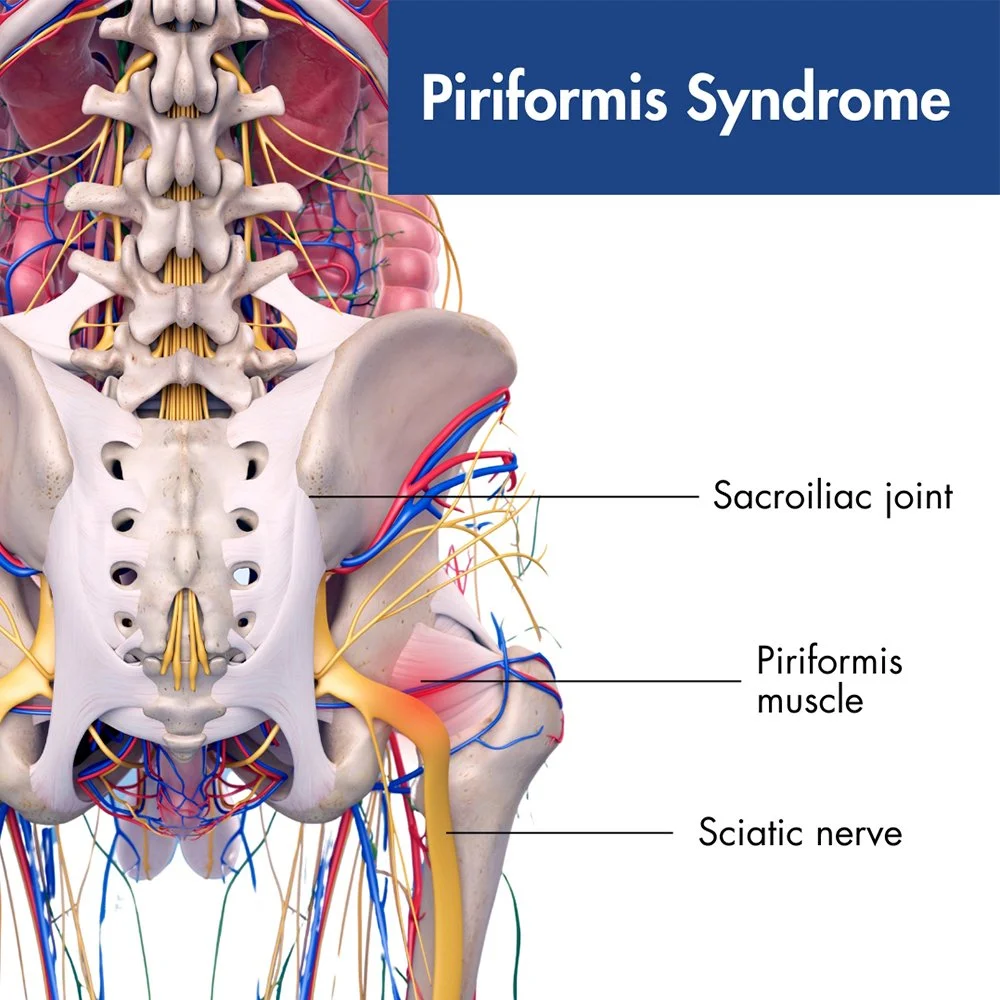
When Deep Hip Pain Is Really a Nerve Conversation
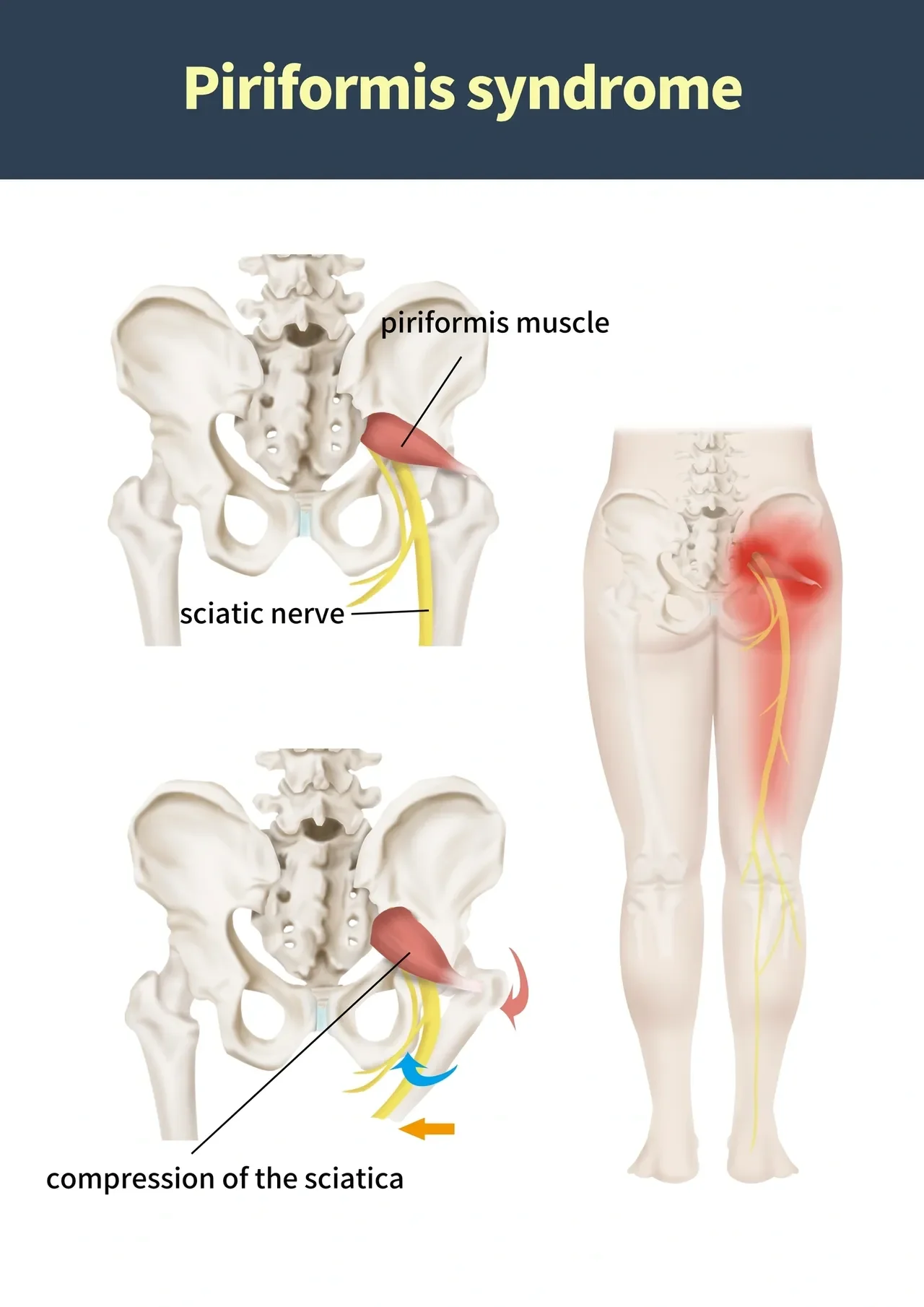
Piriformis syndrome is a condition where deep tension in the piriformis muscle can irritate the sciatic nerve, leading to pain that often feels like it’s coming from the low back, hip, or even down the leg.
What makes this condition confusing is that the source of pain is not always where it is felt. The body is communicating through referred pain patterns, which can make it difficult to pinpoint what is actually happening without a deeper look at movement and tension habits.
What it may feel like
People experiencing piriformis syndrome often describe:
Deep aching or burning in the buttock
Pain when sitting for long periods
Discomfort when standing after sitting
Radiating sensations down the back of the leg
A feeling of tightness that doesn’t fully release with stretching
These sensations can come and go, often influenced by posture, stress, and daily movement patterns.
Why it develops
Piriformis syndrome is rarely caused by one single issue. It often develops through a combination of:
Prolonged sitting and limited hip movement
Overuse from walking, running, or repetitive activity
Imbalances in the glutes and deep hip stabilizers
Compensation from the low back or pelvis
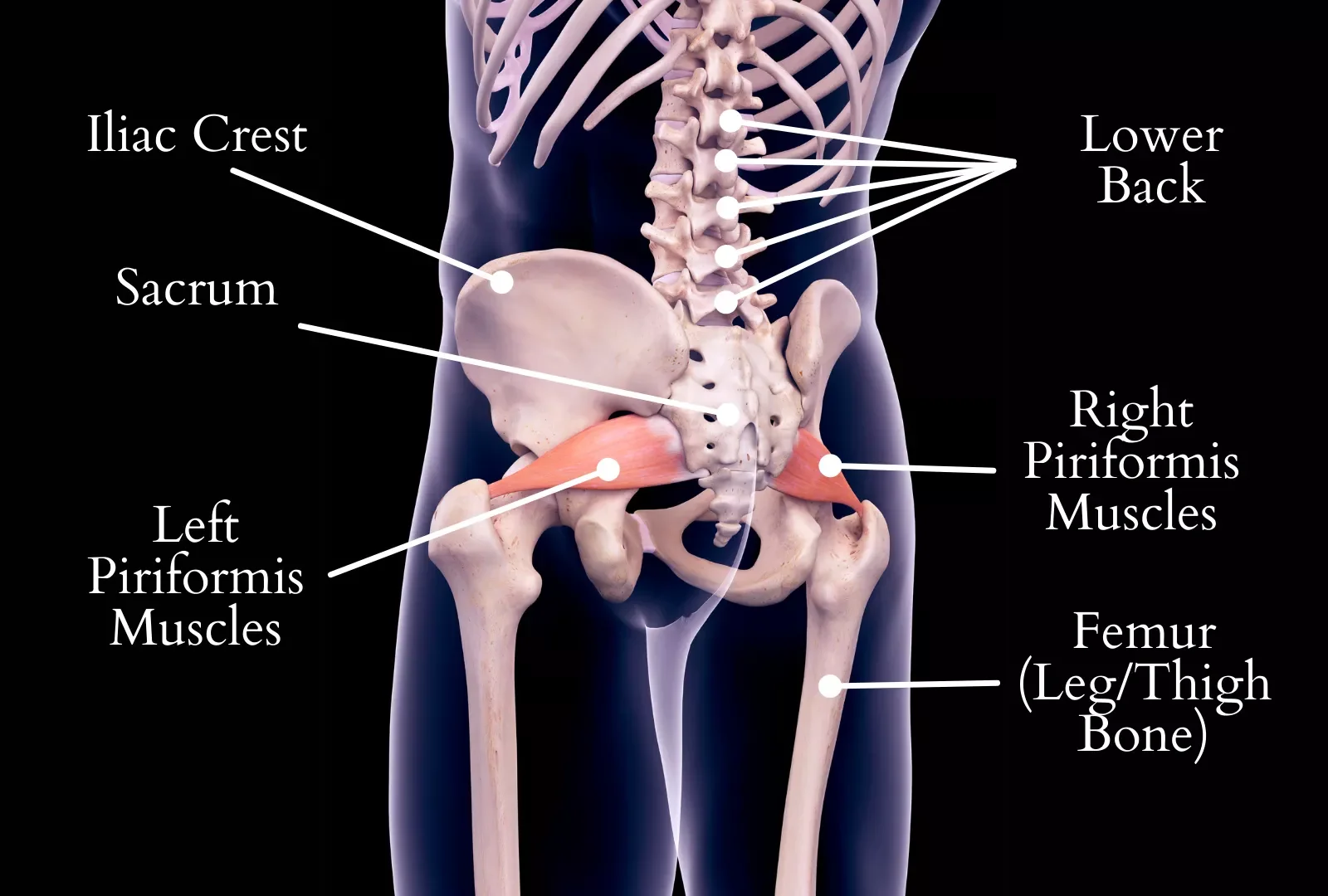
The piriformis muscle is part of a larger system of support for the hips and spine. When other areas are not functioning efficiently, this muscle can become overworked.
A body awareness perspective
From a healing standpoint, this is not just a “tight muscle to fix,” but a signal that the body is adapting to stress, posture, or imbalance.
Supporting the system often involves:
Gentle hip mobility work
Awareness of sitting patterns
Supporting glute activation and balance
Releasing surrounding tension in the pelvis and low back
The goal is not forceful release, but creating space for the body to reorganize and relax.