
Rotator Cuff Tears, Rotator Cuff Syndrome, and Shoulder Restriction: Understanding the Causes, Symptoms, and Recovery
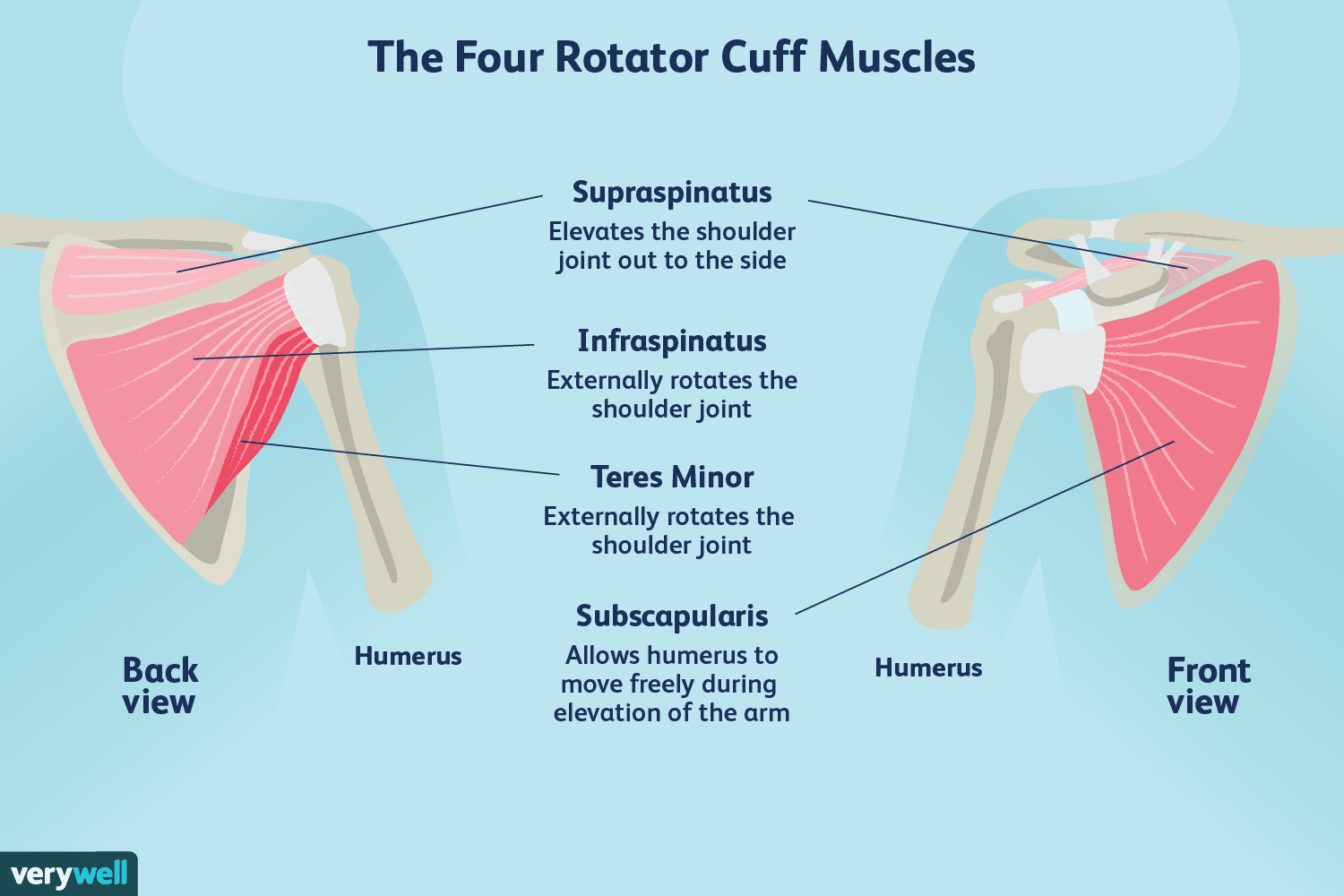
Rotator Cuff muscle group
Shoulder pain can be frustrating because it often affects much more than the shoulder itself. Reaching overhead, putting on a shirt, fastening a bra, sleeping on your side, lifting an object, or simply reaching behind your back can become painful or surprisingly difficult.
Three terms that frequently appear when discussing shoulder dysfunction are rotator cuff tears, rotator cuff syndrome, and shoulder restriction. Although these conditions can overlap, they are not the same thing.
Understanding the difference is important because shoulder pain does not automatically mean that a rotator cuff is torn. Likewise, a person can have significant restriction and pain even when there is no major structural tear.
This article explores the anatomy of the rotator cuff, what happens when it becomes irritated or injured, how tears differ from rotator cuff syndrome, why shoulder restriction develops, and how conservative care—including appropriate movement, rehabilitation, and hands-on approaches—may support recovery.
Important: This information is educational and is not a diagnosis or substitute for an examination by a qualified healthcare professional. Persistent, severe, or worsening shoulder symptoms should be evaluated appropriately.
What Is the Rotator Cuff?
The rotator cuff is a group of four muscles and their tendons that surround the shoulder joint.
The four muscles are:
Supraspinatus
Infraspinatus
Teres minor
Subscapularis
Together, these muscles help stabilize the head of the upper arm bone—the humeral head—within the shallow socket of the shoulder blade.
The rotator cuff is important for both movement and stability.
It assists with:
Raising the arm
Rotating the arm inward
Rotating the arm outward
Reaching overhead
Reaching behind the body
Controlling the arm as it moves
Maintaining the position of the humeral head during shoulder movement
The shoulder is designed to have an impressive amount of mobility. That mobility comes with a tradeoff: the joint relies heavily on muscles, tendons, ligaments, the joint capsule, and coordinated movement for stability.
When one part of that system becomes irritated, overloaded, injured, or restricted, the entire shoulder can begin to compensate.
What Is a Rotator Cuff Tear?
A rotator cuff tear occurs when one of the rotator cuff tendons becomes partially or completely torn.
Tears can occur from either acute trauma or gradual degeneration.
Acute tears
An acute tear may occur after a sudden event such as:
Falling onto the arm
Trying to catch a heavy object
A sudden forceful pulling motion
A sports injury
Lifting something heavier than expected
A traumatic shoulder injury
A person may experience sudden pain and weakness following the injury.
Degenerative tears
Not every rotator cuff tear comes from a single traumatic event.
Over time, tendons can undergo degenerative changes. Repetitive loading, aging, previous injuries, altered shoulder mechanics, and other factors can contribute to tendon deterioration.
Some people have rotator cuff tears visible on imaging without experiencing significant symptoms.
This is an important distinction:
A tear seen on imaging does not automatically tell us how much pain or functional limitation a person will experience.
Partial-Thickness vs. Full-Thickness Tears
Rotator cuff tears can vary considerably in severity.
Partial-thickness tear
A partial tear means the tendon is damaged but not completely separated through its entire thickness.
Symptoms can include:
Shoulder pain
Pain with reaching
Weakness
Pain at night
Difficulty lifting the arm
Pain with certain positions
Full-thickness tear
A full-thickness tear extends through the entire thickness of the tendon.
Depending on the tendon involved and severity of the injury, a person may experience substantial weakness and difficulty performing certain movements.
A traumatic full-thickness tear accompanied by sudden loss of function deserves prompt medical evaluation.
What Is Rotator Cuff Syndrome?
Rotator cuff syndrome is a broader clinical term used to describe pain and dysfunction associated with the rotator cuff and surrounding shoulder structures.
It does not necessarily mean that the tendon is torn.
The rotator cuff can become irritated or overloaded without having a significant tear.
Symptoms may include:
Pain when raising the arm
Pain reaching overhead
Pain when reaching behind the back
Night pain
Pain when lying on the affected shoulder
Weakness caused by pain or impaired muscle function
A painful arc during shoulder elevation
Difficulty with repetitive activities
Rotator cuff-related pain can develop gradually.
For example, someone may begin experiencing mild discomfort when reaching overhead. They may continue using the shoulder normally, assuming it will resolve.
Over time, repeated irritation can cause the shoulder to become increasingly sensitive.
Eventually, movements that were previously easy may become painful.
Rotator Cuff Syndrome Does Not Always Mean "Something Is Torn"
This is one of the most important concepts to understand.
Shoulder pain can arise from a combination of:
Tendon irritation
Load intolerance
Muscle weakness
Altered movement patterns
Joint stiffness
Soft-tissue restriction
Poor shoulder blade mechanics
Repetitive overuse
Previous injury
Nervous-system sensitivity
Therefore, treatment should not focus exclusively on finding something "wrong" on an imaging report.
The goal is to understand how the shoulder is functioning.
Two people can have similar imaging findings but completely different symptoms and functional abilities.
What Is Shoulder Restriction?
Shoulder restriction describes a reduction in normal movement.
A person may notice that they cannot move the arm as freely as they once could.
For example:
The arm does not raise fully overhead.
Reaching behind the back is difficult.
External rotation feels limited.
The shoulder feels tight.
The arm feels "stuck."
Certain movements create pulling or discomfort.
The shoulder blade appears to compensate during movement.
Restriction can develop for many reasons.
It may be related to:
Joint stiffness
Muscle guarding
Pain
Tendon irritation
Scar tissue
Capsular tightness
Previous injury
Prolonged immobilization
Poor movement mechanics
Protective nervous-system responses
Restriction and pain can also reinforce each other.
The Pain-Guarding-Restriction Cycle
When the shoulder hurts, the body often responds protectively.
The muscles surrounding the shoulder may increase their activity to protect the area.
The person may then unconsciously stop using the shoulder through its full range of motion.
Over time:
Pain → guarding → reduced movement → stiffness → altered mechanics → more irritation
This cycle can make the shoulder feel progressively more restricted.
That does not necessarily mean the underlying injury is becoming structurally worse.
Sometimes the body has simply become increasingly protective.
This is one reason rehabilitation often focuses on gradually restoring comfortable movement rather than forcing the shoulder through painful ranges.
Why the Shoulder Can Feel Tight Around the Entire Region
Shoulder dysfunction rarely involves only one muscle.
The shoulder complex includes the:
Shoulder joint
Shoulder blade
Collarbone
Upper thoracic spine
Rotator cuff
Deltoid
Pectoral muscles
Trapezius
Rhomboids
Serratus anterior
Latissimus dorsi
Biceps
Triceps
Neck musculature
These structures work together.
If one area is restricted, another area may compensate.
For example, someone with limited glenohumeral movement may use more movement from the shoulder blade or upper spine when reaching overhead.
That compensation can create additional muscular tension.
Common Symptoms of Rotator Cuff Problems
Symptoms vary depending on the underlying condition, but common complaints include:
1. Pain with overhead movement
Reaching into a cabinet or placing something on a shelf may become uncomfortable.
2. Night pain
Some people experience significant discomfort when lying on the affected side or when sleeping with the arm in certain positions.
3. Pain reaching behind the back
Activities such as fastening clothing, reaching for a back pocket, or putting on a jacket can become difficult.
4. Weakness
The shoulder may feel weak, particularly during lifting or rotation.
However, weakness can sometimes be caused by pain inhibition, meaning the person is capable of generating force but the nervous system limits the effort because movement hurts.
5. Reduced range of motion
The person may gradually lose the ability to move the arm normally.
6. Clicking or catching
Some people notice clicking, popping, or catching during movement. These symptoms do not automatically indicate a tear.
Rotator Cuff Tear vs. Rotator Cuff Syndrome vs. Restriction
These conditions can overlap, but they are different concepts.
ConditionWhat it generally meansRotator cuff tearStructural damage to one or more rotator cuff tendonsRotator cuff syndromeShoulder pain/dysfunction involving the rotator cuff region, often without requiring a significant tearShoulder restrictionReduced mobility that can arise from several different causes
A person may have:
Rotator cuff syndrome + shoulder restriction
or
A rotator cuff tear + pain + restriction
or
Shoulder restriction without a rotator cuff tear.
That is why assessment matters.
How Is a Rotator Cuff Problem Evaluated?
A healthcare professional may evaluate:
Active range of motion
Passive range of motion
Strength
Pain patterns
Shoulder mechanics
History of injury
Functional limitations
Neurological symptoms
Cervical spine involvement
Imaging may also be appropriate depending on the circumstances.
Ultrasound
Ultrasound can sometimes be used to evaluate rotator cuff tendons dynamically.
MRI
MRI provides detailed information about soft tissues and can help identify tendon tears and other structural findings.
X-ray
X-rays do not show the rotator cuff tendons themselves, but they can help evaluate bones, joint space, arthritis, and other structural conditions.
Imaging should be interpreted in the context of the person's symptoms and examination.
Why "Just Stretch It" Isn't Always the Answer
When a shoulder feels tight, the instinct may be to stretch aggressively.
However, aggressive stretching can sometimes irritate an already sensitive shoulder.
The appropriate approach depends on why the shoulder is restricted.
For example, a stiff joint capsule, an irritated tendon, muscle guarding, and a traumatic injury may require very different approaches.
The goal is not simply to achieve the largest possible range of motion.
The goal is to restore useful, comfortable, controlled movement.
The Role of Rehabilitation
Rehabilitation is often an important component of conservative management for rotator cuff-related problems.
Depending on the individual's condition, rehabilitation may address:
Rotator cuff strength
Shoulder blade control
Postural mechanics
Thoracic mobility
Range of motion
Motor control
Gradual loading
Functional movement
Pain management
Exercises may initially be gentle and progress gradually.
The shoulder often responds better to progressive loading than to complete avoidance of movement.
However, exercise selection and progression should be individualized, particularly when a significant tear or acute injury is suspected.
Where Hands-On Bodywork May Fit
Hands-on bodywork may be used as a complement to rehabilitation for appropriate clients.
The goal should not be to "massage a tear back together."
A torn tendon cannot be manually repaired through massage.
Instead, appropriate soft-tissue work may be used to address surrounding muscular tension and improve comfort while the person works toward restoring movement.
Depending on the individual's presentation, practitioners may work with surrounding tissues such as:
Upper trapezius
Pectoral muscles
Latissimus dorsi
Posterior shoulder musculature
Periscapular muscles
Neck and upper back musculature
The shoulder itself should be approached carefully when acute injury, significant inflammation, suspected full-thickness tear, fracture, dislocation, or another serious condition is present.
Manual Lymphatic Drainage and the Shoulder
Manual lymphatic drainage is a specialized technique and is different from traditional deep-tissue massage.
When appropriate, gentle lymphatic techniques may be incorporated into care for individuals experiencing certain forms of postoperative or post-traumatic swelling.
However, lymphatic work should not be presented as a treatment that repairs a torn tendon.
Its potential role is supportive rather than structural.
When swelling is unexplained, sudden, significant, or associated with other concerning symptoms, medical evaluation is appropriate before treatment.
When Should You Seek Medical Evaluation?
Shoulder pain should not simply be pushed through indefinitely.
Seek medical evaluation when you experience:
Sudden severe shoulder pain after an injury
Significant weakness
Inability to raise the arm
Visible deformity
Suspected dislocation
Significant swelling
Persistent pain that is not improving
Progressive loss of movement
Numbness or tingling
Arm weakness associated with neck symptoms
Fever or signs of infection
Severe pain following a fall or trauma
Chest pain, shortness of breath, sweating, nausea, or pain radiating into the arm or jaw requires urgent medical attention because not all shoulder-region pain originates from the musculoskeletal system.
Recovery Is Not Always Linear
One of the most frustrating parts of shoulder recovery is that progress may not happen in a perfectly straight line.
A person may have:
good days → sore days → better movement → temporary flare → gradual improvement
A temporary increase in symptoms does not automatically mean that damage has occurred.
At the same time, persistent worsening should not simply be dismissed as part of recovery.
The important question is whether the overall trend is improving.
What You Can Do to Support Shoulder Health
While every shoulder condition is different, general principles include:
Keep the shoulder moving appropriately
Complete immobilization is not appropriate for every shoulder problem.
Follow the movement recommendations provided by your healthcare professional.
Gradually rebuild strength
The rotator cuff and surrounding muscles need appropriate loading to function effectively.
Avoid repeatedly provoking severe pain
Pain is useful information. It should not always be ignored.
Pay attention to your daily movement patterns
Repeated overhead work, poor workstation positioning, repetitive lifting, or sustained postures may contribute to symptoms.
Address the entire shoulder complex
The shoulder does not function independently from the neck, thoracic spine, ribs, and shoulder blade.
Give the tissue time
Tendons and other connective tissues may require time to adapt to increased loads.
The Bigger Picture: The Shoulder Is a System
One of the biggest mistakes we can make with shoulder pain is looking at a single structure in isolation.
The rotator cuff is important, but the shoulder is a coordinated system.
Pain may be influenced by:
Tendon health
Muscle capacity
Joint mobility
Shoulder-blade mechanics
Thoracic mobility
Previous injuries
Repetitive loading
Sleep position
Stress
Activity levels
Nervous-system sensitivity
This is why two people with the same diagnosis can have very different experiences.
Treatment should be based on the individual, not simply the label.
Final Thoughts
Rotator cuff tears, rotator cuff syndrome, and shoulder restriction are related but distinct problems.
A rotator cuff tear involves structural damage to a tendon. Rotator cuff syndrome is a broader description of pain and dysfunction involving the rotator cuff region and does not automatically mean that a tendon is torn. Shoulder restriction describes limited movement and can occur for numerous reasons.
The most important step is understanding why the shoulder hurts and why movement has become restricted.
A comprehensive approach may involve medical evaluation when necessary, rehabilitation, progressive strengthening, appropriate mobility work, movement education, and carefully selected hands-on care.
The goal is not simply to make the shoulder feel better for an hour.
The goal is to help the person understand their shoulder, restore appropriate movement and capacity, and return to the activities that matter to them as safely as possible.
Your shoulder is more than a painful joint. It is a coordinated system—and effective care starts by looking at the whole picture.